
Geoffrey Hinton
“What’s actually going to happen is rich people are going to use AI to replace workers. It’s going to create massive unemployment and a huge rise in profits. It will make a few people much richer and most people poorer“. – Business Insider
Sam Altman
“[AI] will change the world much less than we all think and it will change jobs much less than we all think.” – CNBC
Elon Musk
“Anything that’s physically moving atoms, like cooking food or farming, anything that’s physical, those jobs will exist for a much longer time. But anything that is digital (…), AI is going to take over those jobs like lightning“. – Business Insider
Ed Zitron
“Everybody’s been saying all these things [AI] are getting exponentially better. They really haven’t. They’ve been getting more powerful based on benchmarks that are rigged specifically for them, because you can’t just test them on real things. (…) But really, it comes down to a far simpler point, which is where are the new things?” – YouTube
Roman Yampolskiy
“So we’re looking at a world where we have levels of unemployment we’ve never seen before. Not talking about 10% unemployment, which is scary, but 99%”. – Entrepreneur
Andrew Ng
“For the vast majority of jobs, if 20-30% is automated, then what that means is the job is going to be there“. – Yahoo Tech
If you’re confused about AI’s impact on jobs, you’re not alone. As you can see, even the people building and studying these systems can’t seem to agree on whether we’re headed for 99% unemployment or barely any disruption at all.
The individuals quoted above aren’t some random voices ranting on the internet. Geoffrey Hinton won a Nobel Prize for his work on neural networks. Sam Altman runs OpenAI, which is one of the companies at the centre of today’s AI boom. The others are respected researchers, journalists, or CEOs of major tech companies. They have deep insider knowledge and real expertise. And they’re not the only professionals disagreeing about where AI is heading and what it means for our world.
This tells us something very important: the future of AI – and our own future alongside it – is anything but certain. It’s not that some experts are right and others are wrong; it’s simply that we’re dealing with a complex system that could play out in several different ways.
Now, Regarding AI Taking Over All Jobs…
Can you picture AI dragging itself out of bed at 5 a.m. for a meeting or hopping on a long-haul flight just to charm a “big fish” client on the other side of the world?
Obviously, AI doesn’t need to wake up because it never sleeps, and it doesn’t need to fly anywhere because it can pretty much be everywhere at once (long live the internet!).
But what happens if there’s a power cut right before it’s supposed to deliver an important presentation? At that point, I’m pretty sure any company would wish it hadn’t swapped its star employee for a bundle of neural networks living on life support.
While exaggerated, this scenario highlights a simple truth: AI is impressive, but it still can’t handle the full complexity of an actual job like a human can.
Yet…we can’t ignore what’s already happening.
On the One Hand…
There are some truly remarkable AI innovations, such as:
- Fully automated factories relying on robotics, AI, IoT, and autonomous control systems. These factories use humanoid workers that run with minimal human supervision and operate around the clock, even in complete darkness at night to save energy.
- Medical facilities that are experimenting with AI‑driven diagnostic tools, robot-assisted surgeries, automated monitoring systems, and even AI doctors capable of providing highly accurate diagnoses. In China, an experimental AI Agent Hospital already tested AI doctors that handled tens of thousands of cases in just a few days. That’s a workload that would take humans years to match.
- Pilot programmes in schools and across various online learning platforms, which are exploring AI teaching assistants, automated grading, and personalised learning to give students a better, more tailored experience.
- Companies like Uber Eats, DoorDash, and Deliveroo, which are already relying heavily on AI to generate menu descriptions, personalise recommendations, predict preparation times, optimise delivery routes, and handle customer service chats.
Furthermore, two LA-based companies have taken the AI “game” to a whole new level. Coco Robotics and Serve Robotics now offer autonomous robots that local businesses can use to deliver food and groceries. LA is also one of the first cities testing driverless delivery cars for point-to-point logistics, reducing the need for human drivers, particularly on repetitive routes. But the crown jewel comes from China, which is once again at the forefront of innovation. China is currently using Unmanned Aerial Vehicles (UAVs), commonly called drones, for rapid food, medical, and parcel transport in cities and remote areas, significantly cutting delivery times and costs. - Warehouse automation, which is allowing companies like Amazon, Alibaba, Walmart, Target, and Albertsons to use robots for physically demanding or repetitive work in fulfilment centres, leaving humans in complementary roles. Millions of warehouse jobs have already been taken over by robots.
On the Other Hand…
It feels like most of us are living in a completely different world.
In the world described above, AI seems straight out of Star Trek, analysing mountains of data, tackling complex tasks, bringing robots to “life”, helping scientists make discoveries, and assisting doctors with life-or-death decisions. In “our” world, which is the reality for most people, AI feels more like an internal combustion engine teleported into the medieval period, with people still trying to figure out what it is and how to make the most of it. Even if we learned how to use it, without the right infrastructure and complementary tools, we still wouldn’t be able to unlock its full potential.
Why do I say this?
Well, simply because over the past few years, we’ve been waiting for AI solutions that could truly revolutionise the way we work and live, all from just a few simple instructions. Instead, that long-awaited technological leap seems to drift farther and farther away.
Honestly now, all that marketing hype about what AI will be able to do one day and how it could transform our lives in the future no longer feels convincing. Not when the AI tools we use today can’t even follow some basic instructions and still hallucinate like they’ve just come out of surgery, and the anaesthesia hasn’t quite worn off.
Over the past couple of years, I’ve felt like I’ve been standing at a bus stop, waiting for a bus everyone swears is “just around the corner”, only for it never to show up. In the same way, waiting for an AI tool that could write this blog post for me, with the same ideas, tone, and flow, feels more like sci-fi wishful thinking than anything close to reality.
Why do I feel this way? Maybe it’s because we’ve all been hearing for years that AI will get exponentially better. And yes, it has improved to a certain degree. But EXPONENTIALLY? Not even close.
And it’s not just me. Some AI critics have pointed out the same problem. Part of the issue is that much of the so-called AI progress is measured on carefully chosen benchmarks rather than real-world performance. It’s like testing a car on a super smooth track and being amazed by its speed. But then, you find out it fumbles over the bumps of a real track. That’s basically what’s happening with many AI tools, including ChatGPT, Gemini, Claude, and Microsoft 365 Copilot. People try them, expecting magic, but end up being… underwhelmed.
In fact, Microsoft’s Copilot is a particularly interesting example, at least from my own experience. Overall, I’ve found the tool quite disappointing. What I mean by that is I’m still trying to figure out what it’s truly useful for beyond summarising meeting minutes. Over a year ago, I thought it was only weeks away from being genuinely useful. Looking at it now, however, it still feels like I’m waiting for a bus that never quite arrives.
Just like Microsoft, other tech giants claim to have made AI more useful, more powerful, and less expensive. But in reality, they haven’t. While some AI models have improved in some areas, their “retro” capabilities have pretty much stayed the same. That’s why they still produce hallucinations when faced with complex reasoning tasks. On top of that, the flashier a model gets, the hungrier it is for computational resources. And despite all the hype, AI still can’t generate new products or meaningful innovation on its own.
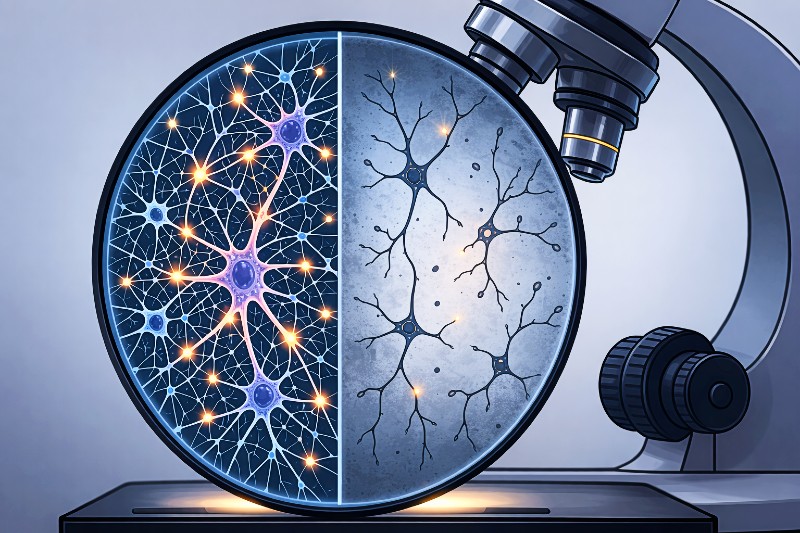
That’s where my idea of two completely opposite worlds that coexist came from: one is filled with incredible potential and breakthrough innovations, while the other is full of limitations and overhype. Frankly, if this is what a tech revolution feels like, I really don’t know what to say.
At the same time, I have to admit we can’t fully rule out the possibility that AI could eventually reach a level where it takes over most jobs. But even then…
The Question Shouldn’t Be "Will AI Take All Our Jobs?"
The real question should be: “Since the future could go in all sorts of directions, how should we think and act today?“
This is a much harder question because it requires nuance. It requires holding multiple possibilities in our heads at once. It requires accepting that we might need to prepare for several different futures. And that’s intellectually exhausting.
It’s obviously so much easier to pick one dramatic prediction and run with it, either panicking about robot overlords or dismissing the whole thing as pure hype.
But here’s the thing: we’re all capable of handling the harder thinking. We do it all the time. Before we buy a house, we don’t assume property prices will definitely go up or definitely crash. We weigh everything, from the economy to the location to our jobs and even possible career changes. As well, when we choose a career, we don’t assume the industry will definitely boom or definitely fail. We hedge our bets. And we also stay flexible, we keep learning, we keep adapting… The same way we’re currently adapting to working and living alongside AI.
I don’t see why we can’t use the same kind of thinking for everything related to AI.
So, What Now?
I think the best way to approach the whole AI revolution is to stop looking for certainty where it doesn’t exist. Whenever someone confidently predicts what AI will definitely do or definitely won’t do, the real question to ask ourselves is whether they aren’t overconfident about their ability to actually understand and assess the situation. I mean, even the people building the technology don’t really know what’s coming. Therefore, it makes far more sense to embrace the uncertainty and make peace with it. We’re more likely to make better decisions that way.
So, instead of letting fear and irrationality pollute your thinking, sketch out a few different scenarios. What will you do if AI transforms your industry? What if it barely affects it? What if the whole bubble bursts? Once you’ve thought through these scenarios, you’re already better prepared than most people.
Because in most cases, those who weather change and uncertainty best aren’t the ones who manage to predict the future perfectly, but the ones who prepare themselves for multiple possibilities.
There’s one more thing worth remembering: the future isn’t something that happens to us. It’s something we’re actively creating. If you care about how AI develops and how it will affect our lives, support the organisations working on AI safety and ethics. Start discussions in your community. Push your employer to think responsibly about automation. Vote for the politicians who take these issues seriously instead of scaremongering or dismissing concerns.
The future of AI isn’t set in stone. It’s being written right now, through the choices each of us makes every day. We all have a voice in shaping it, and you too have a say in how it unfolds. To me, that’s the skill we need right now. Not predicting the future or having the right take but simply being able to think clearly and speak up for what we want. It might be harder than it sounds but considerably more useful than panicking.